Home / Learn
Beginner guide
How to use a marudai.
Kumihimo is Japanese cord braiding. The marudai is the traditional stand that holds your threads in tension so both hands are free to braid. Here is how a first session goes.
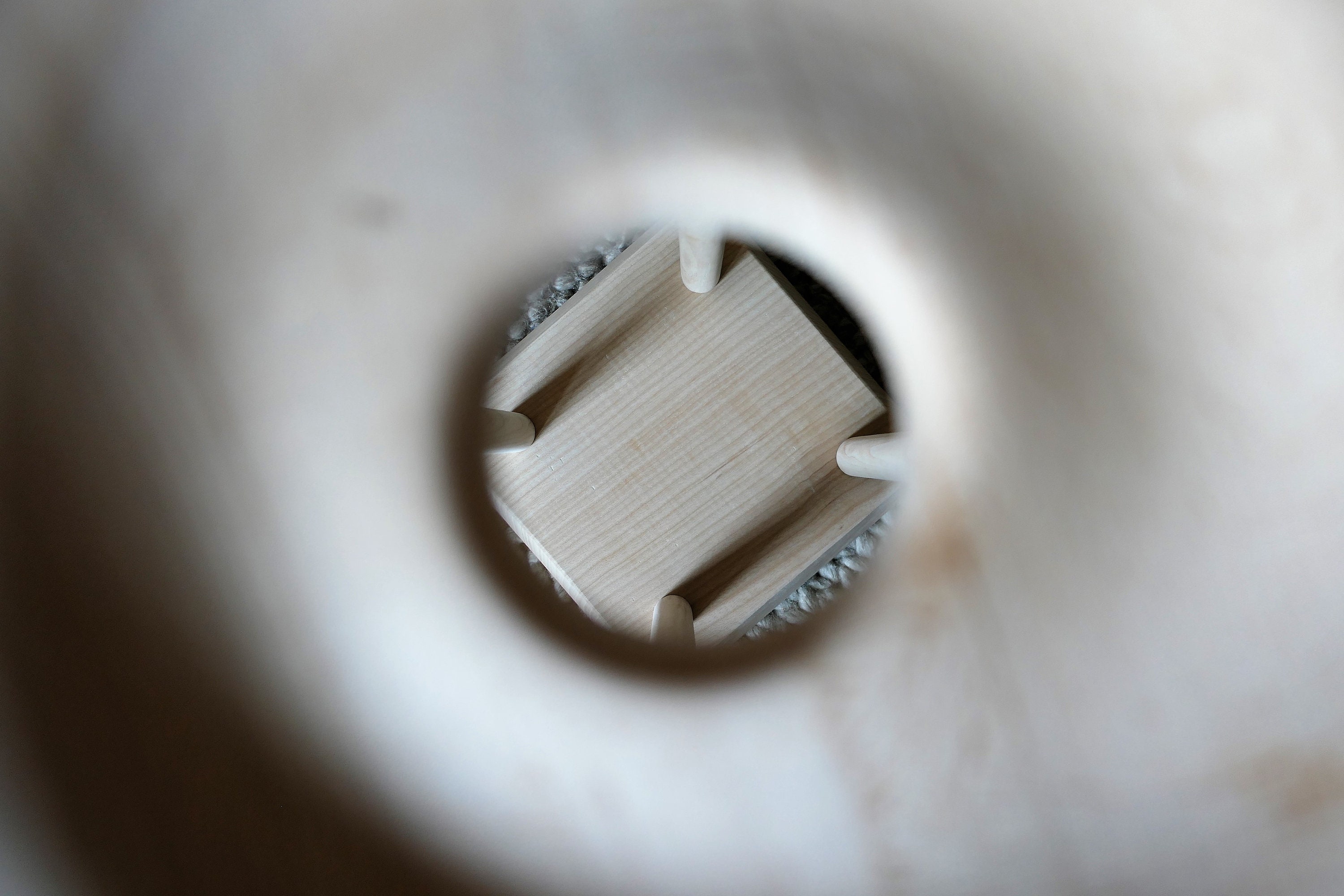
Know the parts
Top plate — the round surface with a centre hole. The braid forms at the hole. Bobbins (tama) — weighted spools that hold your threads and hang over the edge of the plate. Counterweight — a weight hung from the finished braid beneath the stand that keeps tension steady.
Your first braid
- Assemble the stand. Fit the legs to the top plate. It takes a few minutes. Set it on a stable table.
- Prepare your threads. Cut equal lengths and knot them together at one end. Eight strands is a classic start for a round braid such as Edo-yatsu.
- Wind the bobbins. Wind each strand on a bobbin. Use a lighter bobbin for fine thread and a heavier one for thick yarn.
- Thread the centre. Pass the knotted end through the centre hole and attach the counterweight underneath.
- Place the bobbins. Rest them around the plate edge in the starting order of your pattern.
- Braid. Move the bobbins following your pattern, keeping tension even. Within a few minutes the braid starts to grow below the plate.
- Re-wind as you go. When the bobbins run low, release a little thread and carry on.
Choosing your set
Start with the 45 cm stand and eight 70 g bobbins. Add a 65 cm leg set when you want longer working lengths or a higher working surface. Add 16 or 32 bobbins when you are ready for more complex braids.